
Air Conditioning
AC Won't Turn On? Power and Startup Checks in Order
Nothing happens when you call for cooling? Check the thermostat signal, breakers, switches, disconnect, and safety shutdowns in order — and know when to call a pro.
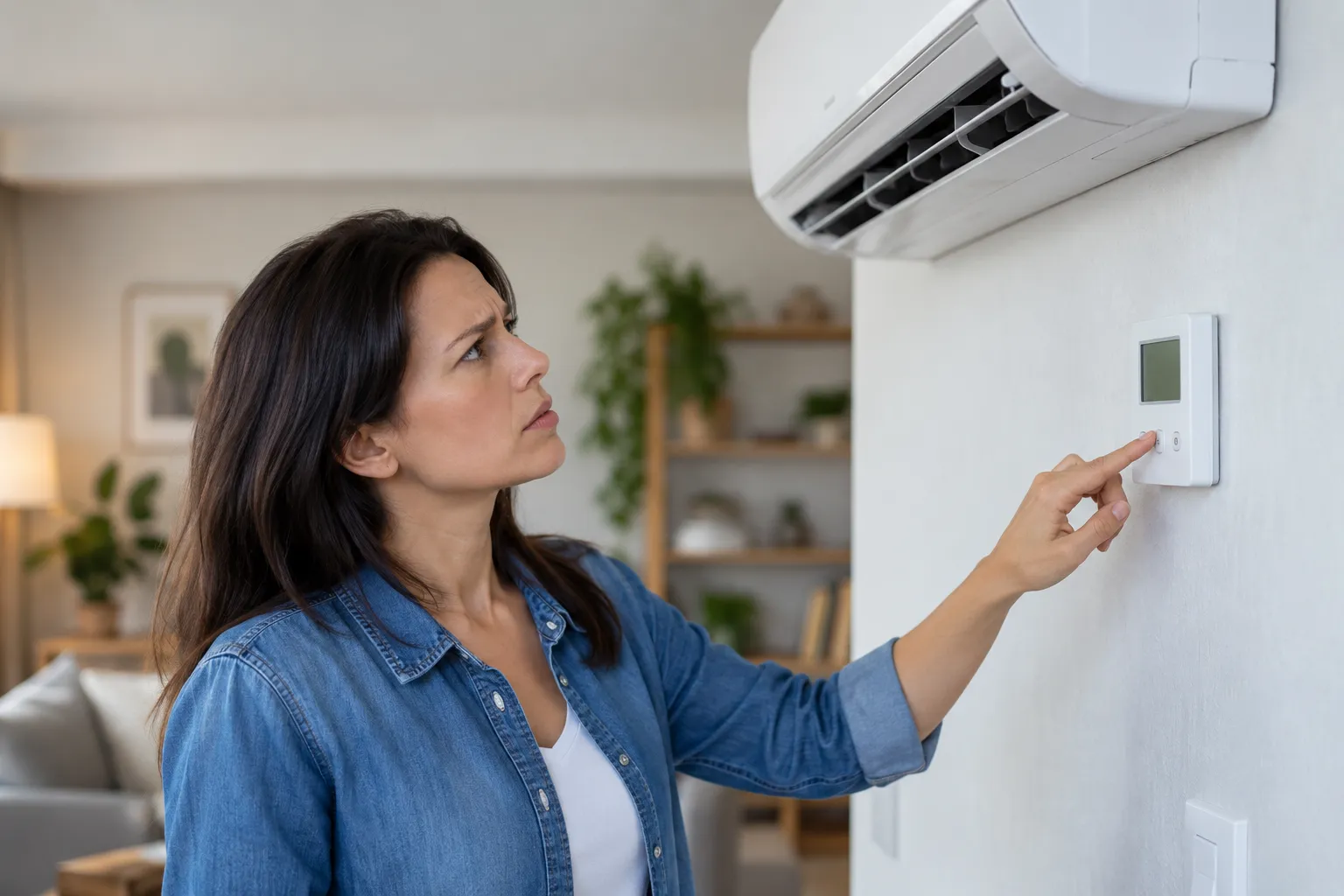
The short answer
If your AC won’t start at all, figure out first what exactly is dead: nothing runs, only the indoor fan runs, or only the outdoor unit is silent. Then check in order — thermostat signal, breakers (reset once, never repeatedly), the furnace switch, the outdoor disconnect, and the condensate safety switch. Anything involving wiring, capacitors, contactors, or control boards belongs to a licensed technician.
- Symptom
- AC does not start when cooling is called — fan, outdoor unit, or everything stays silent
- Likely cause
- Thermostat issue, tripped breaker, off switch or disconnect, or a tripped condensate safety switch
- Safe check
- Thermostat call, breakers, furnace switch, outdoor disconnect, drain-pan safety switch
- Next step
- Call a technician for repeated trips, burning smells, or any wiring, capacitor, or control-board fault
First: what exactly is dead?
Your answer routes the whole diagnosis, so observe carefully before touching anything:
| What you observe | What it tells you |
|---|---|
| Nothing runs — no fan, no outdoor hum | Power or signal never reaches the system; start at the thermostat and breakers |
| Indoor fan runs, outdoor unit silent | Indoor power is fine; suspect the outdoor breaker, disconnect, or a failed start component (technician territory) |
| Outdoor unit hums but fan doesn’t spin | Likely a failed capacitor or motor — turn it off and call a technician |
| System starts, then dies within minutes | A safety device may be tripping it — including the condensate switch below |
If the system actually runs but the air isn’t cold, you’re in the wrong guide — use our no-cooling walkthrough instead. And if you find visible ice on the lines while checking, switch to our frozen-coil guide.
1. Confirm the thermostat is actually calling
- Mode on Cool, setpoint clearly below room temperature.
- Listen for a faint click from the thermostat or indoor unit when cooling calls — that click is the signal leaving. No click after fresh batteries and correct settings points to the thermostat itself.
- Replace weak batteries; a fading thermostat sends weak or no signals.
- If the display is dead even with new batteries, check the small fuse on the indoor control board? No — stop there. A dead low-voltage circuit is technician work; note it and call.
2. Check the breakers — once
Air conditioning typically has two breakers: one for the indoor unit, one for the outdoor condenser.
- Find both, labeled AC, air handler, furnace, or condenser.
- If either is tripped, reset it exactly once, then try cooling.
- If it trips again, leave it off. A repeat trip means a short, a failing motor, or a ground fault — resetting further risks fire and equipment damage. This is an electrician call, full stop.
3. Check the furnace switch and outdoor disconnect
Two switches fool homeowners constantly:
- The furnace/air-handler switch looks like an ordinary light switch on or near the indoor unit. It must be on for anything — including cooling — to run.
- The outdoor disconnect is a pull-out block or lever in a small box beside the condenser. If it’s pulled or off (common after servicing or yard work), the outdoor unit can’t start even though the indoor fan runs fine. Reseat or switch it on firmly.
4. Check the condensate safety switch
This is the shutdown most homeowners have never heard of, and it’s a frequent culprit in humid weather:
- As your AC cools, it pulls water from the air into a drain pan. Many systems have a float switch that kills the system if that pan fills — usually because the drain line is clogged.
- Signs: a full drain pan, water stains or pooling near the indoor unit, or a small switch device with its float visibly raised.
- Safe homeowner steps: turn cooling off, clear visible gunk from the drain line’s accessible end, empty a portable condensate pump reservoir if you have one, and let the pan drain. A plugged drain left alone causes water damage — the ENERGY STAR maintenance checklist flags drain inspection for exactly this reason.
- If the pan refills and trips again, the clog is deeper in the line — a technician clears it in minutes with the right vacuum.
5. A quick word on the filter
A dirty filter rarely prevents starting — but since you’re already at the unit, check it. A severely clogged filter strains the blower and freezes coils, which creates tomorrow’s problem. Check monthly in cooling season and change it when dirty, per ENERGY STAR guidance.
When to stop and call a professional
- Repeat breaker trips, burning smells, buzzing, or scorch marks.
- Outdoor hum with a still fan (capacitor/motor failure — capacitors hold a dangerous charge even with power off).
- No thermostat signal after batteries and settings are ruled out (control-board or low-voltage fault).
- Recurring condensate trips you can’t clear from the accessible end.
- Anything requiring opening panels, measuring voltage, or touching refrigerant lines — servicing sealed systems requires certified technicians under EPA Section 608.
Frequently asked questions
The thermostat clicks but nothing happens — what does that mean? The signal is leaving the thermostat but dying downstream: breaker, switch, disconnect, safety switch, or a failed component. Work steps 2–4 in order.
Can a clogged drain really shut down the whole AC? Yes — that’s the float switch doing its job. It’s protecting your ceiling and floors from overflow. Clear the accessible clog; if it recurs, have the line professionally cleared.
Should I keep flipping the breaker to “test” it? No. One reset is a test; every reset after that is a gamble with a fault that has already announced itself. Leave it off and call an electrician.
Sources
- ENERGY STAR, Maintenance Checklist — filter, drain, thermostat, and professional check-up roles (accessed 2026-09-07).
- U.S. EPA, Stationary Refrigeration and Air Conditioning (Section 608) — refrigerant servicing restrictions (accessed 2026-09-07).
- Your equipment’s manual for breaker labels, switch locations, and drain-pan layout.
Once your system starts reliably, the rest of our air-conditioning hub covers what to do if it runs but doesn’t cool.